admin@bhaskarnewspaper.com
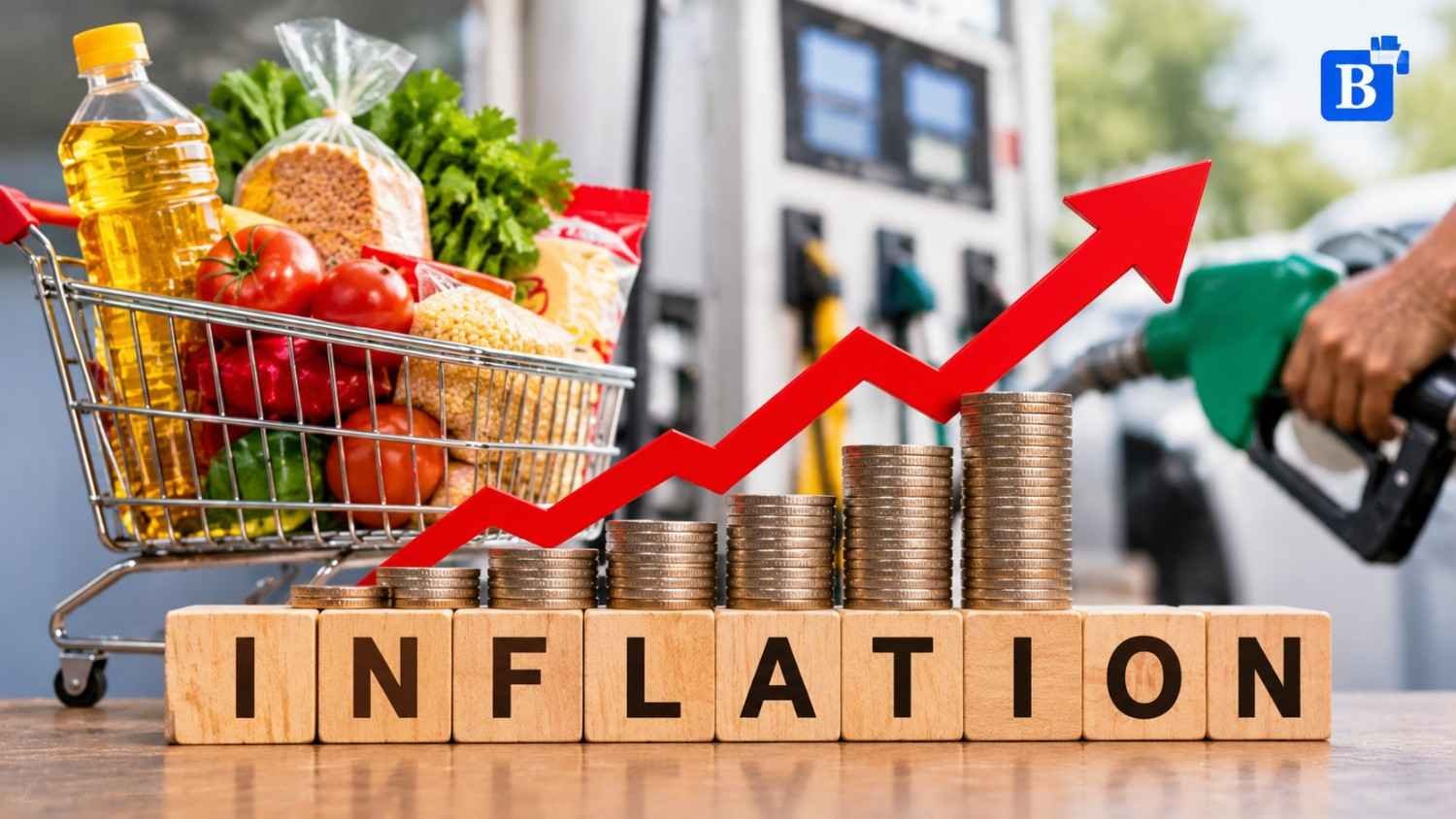
New Delhi, November 16, 2026: India’s wholesale price inflation increased to 12.29% in October 2026, compared with 11.39% in September. The sharp rise was mainly driven by higher fuel and power prices, including crude petroleum, natural gas and mineral oils.
According to provisional data released by the Ministry of Commerce and Industry on Monday, wholesale inflation has increased for the third consecutive month. The latest figure is also the highest recorded under the current Wholesale Price Index (WPI) series, which uses 2022–23 as its base year.
The rise in wholesale prices indicates that businesses are facing higher costs for fuel, raw materials and other goods. These increased costs could put further pressure on manufacturers, transport companies and other businesses.
Wholesale inflation rises from 11.39% to 12.29%
The Wholesale Price Index measures changes in the prices of goods at the wholesale level, before they reach consumers through retail markets.
The overall WPI inflation rate increased from 11.39% in September to 12.29% in October 2026.
The All-India Wholesale Price Index also increased to 113.3 in October from 112.5 in September.
This means wholesale prices continued to rise across several important sectors of the economy.
Fuel and power prices become the biggest reason
The fuel and power category recorded the sharpest increase among the major groups.
Inflation in this category rose to 32.84% in October from 25.85% in September.
The increase was mainly due to higher prices of crude petroleum, natural gas, mineral oils and electricity.
Some important figures include:
- Crude petroleum and natural gas: Inflation increased to 70.80% in October from 57.32% in September.
- Mineral oils: Inflation rose to 45.57% from 40.02%.
- Electricity: Inflation increased to 8.06% after recording a decline of 0.43% in September.
- Coal and lignite: Inflation increased to 10.49% from 9.31%.
The rise in fuel prices is important because energy is used in transportation, manufacturing, agriculture and many other business activities.
When fuel and electricity become more expensive, companies may also face higher costs for producing and transporting goods.
Inflation also rises in primary articles
Prices of primary articles also recorded an increase in October.
Inflation in this category rose to 9.24% from 8.67% in September.
Primary articles include food items, minerals and non-food agricultural products.
Within this category:
- Food articles inflation increased to 8.26% from 8.14%.
- Non-food articles inflation rose to 11.69% from 10.28%.
- Minerals inflation increased to 12.64% from 9.51%.
These figures show that price pressure was not limited to the energy sector. Several raw materials and agricultural-related products also became more expensive.
Manufacturing inflation shows a slight decline
While fuel and primary article prices increased, inflation in manufactured products recorded a small decline.
Manufactured products inflation eased to 9.54% in October from 9.76% in September.
However, several manufacturing sectors continued to face higher costs.
Inflation in basic metals increased to 17.21% from 16.96%. Chemicals and chemical products recorded inflation of 17.53%, compared with 16.74% in September.
Inflation in rubber and plastic products also increased to 13.90% from 13.47%.
On the other hand, inflation in manufactured food products eased to 9.24% from 9.44%, while textile manufacturing inflation declined slightly to 13.67% from 13.85%.
Wholesale food inflation remains high
The overall Wholesale Price Index Food Index recorded inflation of 8.58% in October, slightly lower than 8.66% in September.
This index includes food articles as well as manufactured food products. It carries a weight of 24.99% in the overall WPI.
Although the combined food inflation rate eased slightly, inflation in primary food articles increased from 8.14% to 8.26%.
This means food-related price pressure remained an important part of the wholesale inflation picture.
What does rising wholesale inflation mean for ordinary people?
Wholesale inflation does not directly measure the prices paid by consumers in shops. It tracks price changes at the wholesale level.
However, a continued rise in wholesale prices can affect ordinary households if businesses pass higher production and transportation costs on to customers.
For example:
- Transport costs: Higher fuel prices can increase the cost of moving goods between factories, warehouses and markets.
- Manufacturing costs: Companies using petroleum, metals, chemicals and electricity may have to spend more on production.
- Food supply chains: Higher costs for storage, processing and transportation can add pressure to food businesses.
- Consumer prices: If companies pass these additional costs on, some goods may become more expensive for customers.
The final effect on retail prices will depend on several factors, including company pricing decisions, government policies, global oil prices and demand.
Therefore, a 12.29% rise in wholesale inflation does not mean that the prices of all household products have increased by the same amount.
Retail inflation is also above the RBI’s target range
The wholesale inflation figures come after a rise in India’s retail inflation.
Retail inflation, measured through the Consumer Price Index (CPI), increased to 6.09% in October from 5.54% in September.
This placed retail inflation above the Reserve Bank of India’s upper tolerance limit of 6%.
The two indices measure different stages of price changes. WPI tracks wholesale prices, while CPI measures the prices consumers pay for goods and services.
The difference between the two figures is important for policymakers because both producer costs and household expenses need to be monitored.
Wholesale inflation during April–October
The cumulative WPI inflation rate for the April–October period of the 2026–27 financial year stood at 10.14%.
During this period, inflation in the major groups was:
- Fuel and Power: 26.37%
- Primary Articles: 7.15%
- Manufactured Products: 8.37%
For comparison, wholesale inflation had recorded a contraction of 0.30% during the corresponding period of the previous financial year, 2025–26.
This shows how sharply wholesale price conditions have changed over the past year.
What happens next?
The government has released the October WPI figures as provisional data. The final figures may be updated after more responses and information are received.
According to the Ministry of Commerce and Industry, the provisional WPI data for November 2026 is scheduled to be released on December 14, 2026.
Economists will continue to watch international crude oil prices, fuel costs, food prices and manufacturing expenses to understand whether wholesale inflation will rise further or begin to ease.
For businesses and consumers, the direction of energy prices will remain an important factor in the coming months.
Frequently Asked Questions (FAQs)
1. What was India’s wholesale inflation rate in October 2026?
India’s wholesale inflation rate increased to 12.29% in October 2026, compared with 11.39% in September.
2. Why did wholesale inflation rise in October?
The increase was mainly driven by higher fuel and power prices, including crude petroleum, natural gas, mineral oils and electricity.
3. What was fuel and power inflation in October 2026?
Fuel and power inflation increased to 32.84% in October from 25.85% in September.
4. What was the inflation rate for crude petroleum and natural gas?
Inflation in crude petroleum and natural gas rose to 70.80% in October from 57.32% in September.
5. Does wholesale inflation directly affect retail prices?
No. Wholesale inflation measures price changes at the wholesale level. However, higher business costs can eventually affect retail prices if companies pass those costs on to consumers.
6. What is the difference between WPI and CPI?
WPI measures price changes in goods at the wholesale level, while CPI measures changes in the prices of goods and services paid by consumers.
7. What was retail inflation in October 2026?
Retail inflation increased to 6.09% in October from 5.54% in September.
8. What was India’s cumulative wholesale inflation in April–October 2026?
The cumulative WPI inflation rate for April–October of the 2026–27 financial year was 10.14%.
9. When will the November 2026 WPI data be released?
The government has scheduled the provisional November 2026 WPI release for December 14, 2026.
Conclusion
India’s wholesale inflation increased to 12.29% in October 2026, mainly because of a sharp rise in fuel and power prices. Higher costs of crude petroleum, natural gas and mineral oils pushed the overall inflation rate upward.
Although manufacturing inflation eased slightly, several industries continued to face price pressure. The coming months will show whether lower energy costs can help reduce wholesale inflation or whether businesses will continue to face higher input expenses.