admin@bhaskarnewspaper.com
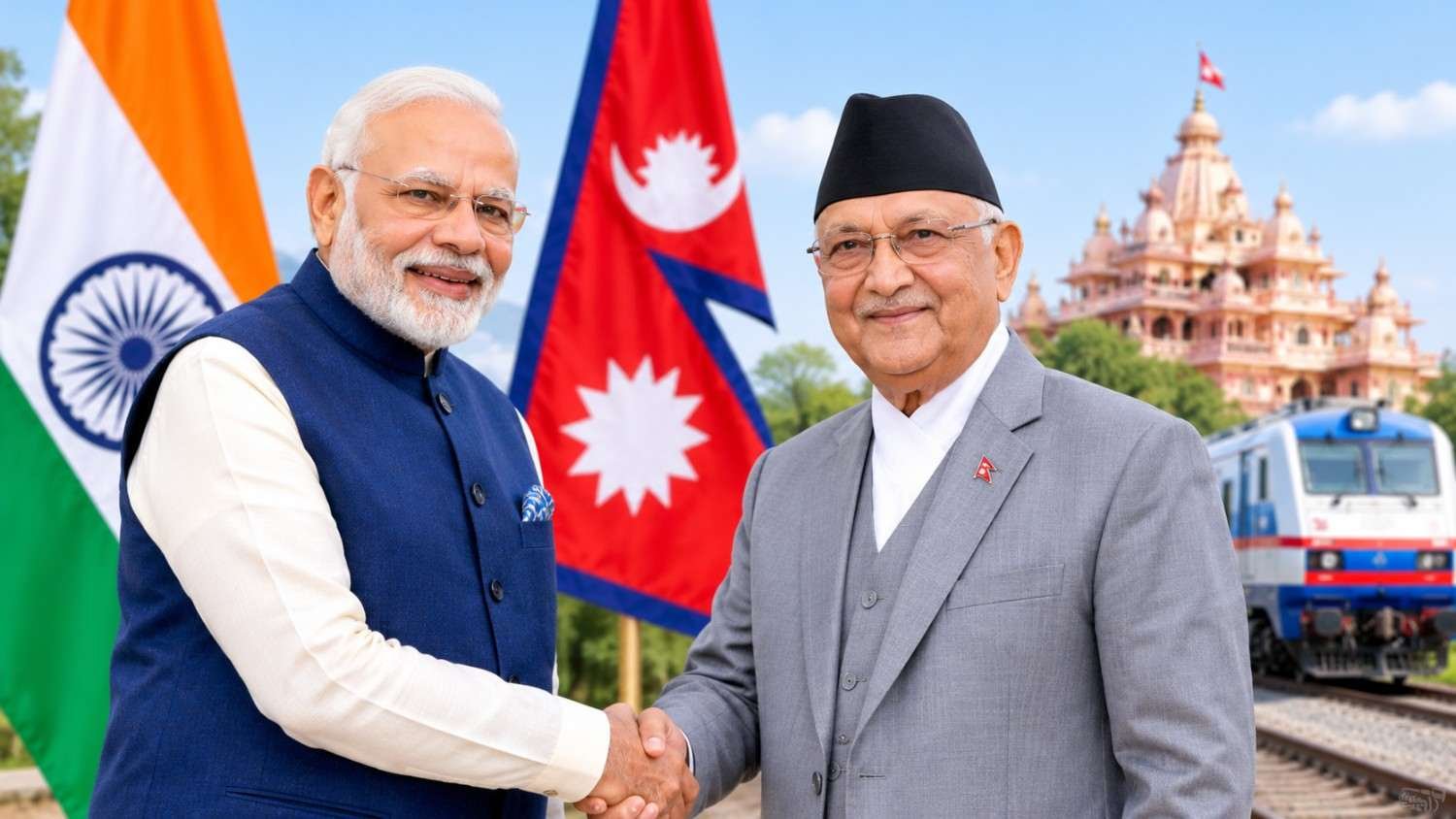
India has announced a major development cooperation package worth ₹15,000 crore for Nepal following high-level talks between Prime Minister Narendra Modi and Nepalese Prime Minister Balendra Shah in New Delhi on November 23, 2026. The announcement came during Shah’s two-day state visit to India, which also resulted in eight agreements covering several important sectors, including healthcare, technology, security, agriculture and infrastructure.
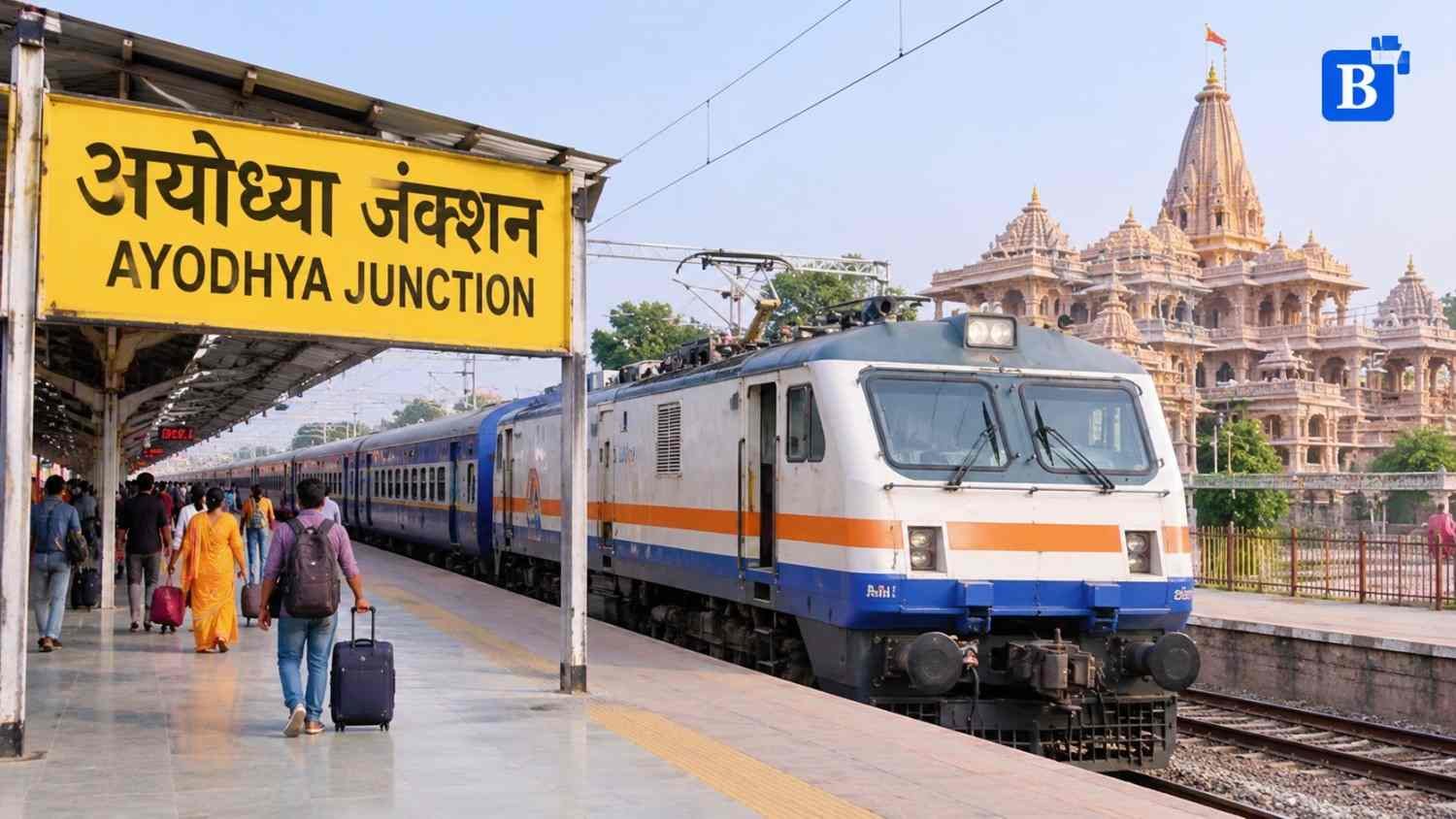
Along with the financial assistance, the two countries also launched a new direct passenger train service connecting Ayodhya in Uttar Pradesh with Janakpur Dham in Nepal. Named the Saryu-Kamala Express, the train will cover approximately 604 kilometres in around 19 hours. Its regular weekly services in both directions will begin on November 28, 2026.
The new initiatives aim to strengthen India–Nepal relations through development cooperation, improved transportation, religious tourism and economic connectivity. Press Information Bureau+3
India Announces ₹15,000-Crore Development Package for Nepal
Prime Minister Narendra Modi announced a development cooperation package worth 24,000 crore Nepali rupees, equivalent to approximately ₹15,000 crore in Indian currency.
The package is intended to support Nepal’s reconstruction, long-term development and disaster preparedness, particularly after the devastating floods that affected the country in August.
According to the official announcement published by the Press Information Bureau (PIB), the assistance will be divided into two major parts:
- ₹3,500 crore in grant assistance: This amount will support post-disaster reconstruction and new infrastructure projects in Nepal.
- ₹11,500 crore through a Rupee-denominated Line of Credit: This amount will support projects in Nepal’s energy sector.
The two components together make up the total ₹15,000-crore development assistance package.
A Line of Credit is a financing arrangement under which funds are made available for eligible projects and are subject to agreed repayment conditions. Therefore, the entire package is not a direct grant.
The specific projects and the arrangements for providing the assistance will be finalised through discussions between the two governments.
Modi said the support would help affected families rebuild their lives, create new opportunities and improve Nepal’s ability to deal with future disasters. Press Information Bureau+2
Narendra Modi and Balendra Shah Hold Bilateral Talks in New Delhi
The announcement followed bilateral discussions between Indian Prime Minister Narendra Modi and Nepalese Prime Minister Balendra Shah at Hyderabad House in New Delhi.
The meeting focused on strengthening cooperation in several areas, including economic development, infrastructure, energy, trade, security and people-to-people relations.
Balendra Shah’s visit was his first official bilateral visit to India after becoming Nepal’s Prime Minister in March 2026.
During the discussions, both leaders highlighted the importance of mutual respect, trust and cooperation between the neighbouring countries.
Modi welcomed Shah and said India had always been a partner in Nepal’s development journey. He also expressed India’s commitment to supporting Nepal during difficult times.
The two leaders also discussed improving cross-border connectivity and expanding cooperation in areas that could create new economic opportunities for people in both countries.
The visit resulted in the announcement of the development package, the launch of the Ayodhya–Janakpur train and the exchange of eight Memorandums of Understanding (MoUs). India News – The Indian Express+2
Eight Agreements Signed Between India and Nepal
India and Nepal exchanged eight agreements during the high-level meeting. These agreements cover technology, policing, forensic science, healthcare, traditional medicine, administrative training, urban development and agriculture-related activities.
The agreements are expected to strengthen cooperation between government institutions and provide opportunities for knowledge-sharing and technical development.
The eight agreements cover the following areas:
1. Satellite Communication Network
The Indian Space Research Organisation (ISRO) and Nepal’s Ministry of Information and Communication signed an agreement to establish a satellite communication network using the South Asia Satellite.
This cooperation is expected to strengthen communication infrastructure and improve access to satellite-based services.
2. Forensic Science Cooperation
India’s National Forensic Sciences University (NFSU), Gandhinagar, signed an agreement with Nepal Police’s Crime Investigation Department.
The agreement focuses on academic cooperation, research and the exchange of expertise in forensic investigations.
3. Police Training and Cooperation
India’s Rashtriya Raksha University (RRU) and Nepal’s National Police Academy signed an agreement to improve cooperation in police training and institutional development.
4. Civil Service Training
India’s National Centre for Good Governance (NCGG) entered into an agreement with Nepal’s Administrative Staff College.
The arrangement will support training programmes and capacity-building activities for Nepalese civil servants.
5. Healthcare Cooperation
The health ministries of India and Nepal signed an agreement to strengthen cooperation in healthcare and medicine.
The partnership aims to improve institutional collaboration and knowledge-sharing in the health sector.
6. Ayurveda and Traditional Medicine
The two countries also signed a government-to-government agreement to promote cooperation in Ayurveda and other traditional systems of medicine.
7. Sustainable Urban Development
Another agreement focuses on technical cooperation in sustainable urban development. It is expected to support the exchange of knowledge and expertise in urban planning and development.
8. Livestock and Fisheries Development
The final agreement focuses on cooperation in livestock and fisheries development, including technical knowledge and institutional collaboration.
Together, these eight agreements are intended to expand cooperation beyond traditional diplomatic relations and strengthen practical partnerships between the two countries. Press Information Bureau+2
Ayodhya–Janakpur Saryu-Kamala Express to Begin Regular Service on November 28
One of the major announcements during the visit was the launch of the direct passenger train service connecting Ayodhya in Uttar Pradesh with Janakpur Dham in Nepal.
The train is named the Saryu-Kamala Express and connects two important destinations associated with the Ramayana tradition.
Ayodhya is traditionally regarded as the birthplace of Lord Ram, while Janakpur is associated with the birthplace of Goddess Sita.
Prime Minister Narendra Modi and Nepalese Prime Minister Balendra Shah virtually flagged off the train on November 23, 2026.
However, the inaugural journey and regular commercial operations are separate. The regular weekly passenger service in both directions is scheduled to begin on November 28.
The new connection is expected to make travel easier for pilgrims, tourists and other passengers travelling between India and Nepal. The Times of India+1
Ayodhya–Janakpur Train: Route, Distance and Timings
The Saryu-Kamala Express will cover approximately 604 kilometres between Ayodhya Cantt and Janakpur Dham.
The journey is expected to take around 19 hours, allowing passengers to travel directly without changing trains.
Important details of the service are given below:
| Particular | Details |
|---|---|
| Train name | Saryu-Kamala Express |
| Starting point | Ayodhya Cantt, Uttar Pradesh |
| Destination | Janakpur Dham, Nepal |
| Total distance | Approximately 604 km |
| Journey duration | Around 19 hours |
| Regular service begins | November 28, 2026 |
| Frequency | Once weekly in each direction |
| Train composition | 17 coaches |
| Main purpose | Passenger travel and religious tourism |
Ayodhya to Janakpur Train Timings
According to the reported railway schedule:
Ayodhya to Janakpur:
- Train number: 15596
- Departure: Every Monday at 5:50 PM from Ayodhya Cantt.
- Arrival: Tuesday at 12:40 PM Nepal time at Janakpur Dham.
Janakpur to Ayodhya:
- Train number: 15595
- Departure: Every Saturday at 1:10 PM Nepal time from Janakpur Dham.
- Arrival: Sunday at 8:10 AM at Ayodhya Cantt.
The train will have commercial halts at 10 intermediate stations. These include Ayodhya Dham, Mankapur, Basti, Gorakhpur, Narkatiaganj, Raxaul, Sitamarhi, Shisho, Madhubani and Jainagar.
The 17-coach train will include eight AC coaches, seven sleeper coaches and two luggage and generator-related coaches.
The AC accommodation will include second AC, third AC and third AC economy classes.
Passengers should check the latest Indian Railways timetable and ticket availability before planning their journey. The Times of India+1
New Train Service Expected to Boost Religious Tourism
The Ayodhya–Janakpur railway connection has both transportation and cultural importance.
Ayodhya and Janakpur are closely associated with the Ramayana and have strong religious connections for devotees in India and Nepal.
Until now, travellers planning visits between these destinations have had to depend on other transport arrangements. The direct train service will provide a more convenient option for passengers travelling between the two religious centres.
The railway connection is expected to benefit:
- Pilgrims visiting Ayodhya and Janakpur.
- Families travelling between India and Nepal.
- Tourists interested in Ramayana-related destinations.
- Passengers travelling through Uttar Pradesh, Bihar and Nepal.
- Local businesses involved in tourism, transport and hospitality.
The Indian and Nepalese governments have also discussed developing religious tourism circuits connecting important destinations associated with the Ramayana, Buddhism and the Shiv–Shakti tradition.
The proposed Ramayana circuit will connect Ayodhya and Janakpur, while the Buddhist circuit will link Lumbini, Bodh Gaya, Sarnath and Kushinagar.
These initiatives are intended to encourage cross-border tourism and strengthen cultural exchanges between the two countries. Press Information Bureau+2
India and Nepal Discuss Better Road, Rail and Energy Connectivity
Apart from the new train service, both countries discussed several other infrastructure projects aimed at improving cross-border transportation and economic cooperation.
The discussions included the development of Integrated Check Posts (ICPs), railway infrastructure, bridges and petroleum supply networks.
The two governments agreed to expedite work on Integrated Check Posts at Bhairahawa in Nepal and Sunauli in India. New facilities are also planned at Banbasa in India and Dodhara Chandani in Nepal.
Both sides also discussed completing important railway sections of the Jayanagar–Bardibas and Jogbani–Biratnagar railway projects.
The Raxaul–Kathmandu railway link and the development of Nepal’s East–West Rail Link were also included in the connectivity discussions.
In the energy sector, the two countries discussed expanding cross-border petroleum infrastructure, including a proposed pipeline connecting Siliguri in India with Jhapa in Nepal.
Cooperation in hydropower and energy supply also remains an important part of the India–Nepal partnership.
The official joint statement also highlighted the importance of improving cross-border digital payments and strengthening trade connectivity. Press Information Bureau+1
What Does the India–Nepal Agreement Mean for Both Countries?
The announcements made during the November 23 meeting cover several areas that directly affect economic development and people-to-people relations.
For Nepal, the ₹15,000-crore development package will provide financial support for reconstruction, infrastructure development and energy projects.
The eight agreements will create opportunities for cooperation in technology, healthcare, policing, administration and agriculture.
For India, improved railway, road and energy connectivity can support trade, transportation and stronger economic links with its neighbouring country.
The Ayodhya–Janakpur train also provides a new direct connection between two important religious destinations, potentially increasing tourism and travel between the countries.
The announcements represent a combination of financial assistance, institutional cooperation and infrastructure development.
However, the actual impact will depend on the implementation of the projects, finalisation of individual agreements and progress in cross-border infrastructure work.
Latest Updates: India–Nepal Development Package and Train Service
As of November 23, 2026, the key announcements include:
- India announced ₹15,000 crore in development assistance for Nepal.
- The package includes ₹3,500 crore in grants and ₹11,500 crore through a Line of Credit.
- Eight MoUs were exchanged between the two countries.
- The Saryu-Kamala Express was virtually flagged off on November 23.
- Regular Ayodhya–Janakpur train services are scheduled to begin on November 28.
- The train will cover approximately 604 kilometres in around 19 hours.
- Both countries discussed further cooperation in road, rail, energy and tourism projects.
The next important development will be the start of regular commercial operations of the Saryu-Kamala Express on November 28, 2026.
Frequently Asked Questions (FAQs)
1. How much development assistance has India announced for Nepal?
India has announced a development cooperation package worth ₹15,000 crore, equivalent to 24,000 crore Nepali rupees. It includes grants and a Line of Credit.
2. What is the purpose of the ₹15,000-crore package?
The package is intended to support Nepal’s post-disaster reconstruction, infrastructure development, energy projects and long-term development.
3. How much of the Nepal package is grant assistance?
The package includes ₹3,500 crore in grant assistance for reconstruction and new infrastructure projects. Another ₹11,500 crore will be provided through a Rupee-denominated Line of Credit for energy projects.
4. When will the Ayodhya–Janakpur train service start?
The Saryu-Kamala Express is scheduled to begin regular weekly services in both directions on November 28, 2026. It was virtually flagged off on November 23.
5. What is the name of the Ayodhya–Janakpur train?
The new train service is named the Saryu-Kamala Express.
6. How far is Ayodhya from Janakpur by train?
The railway journey covers approximately 604 kilometres and takes around 19 hours.
7. How many agreements did India and Nepal sign?
India and Nepal exchanged eight agreements covering satellite communication, policing, forensic science, civil service training, healthcare, traditional medicine, sustainable urban development, and livestock and fisheries development.
8. Who are the Prime Ministers of India and Nepal involved in the agreement?
The announcements were made following discussions between Indian Prime Minister Narendra Modi and Nepalese Prime Minister Balendra Shah.
9. Will the Ayodhya–Janakpur train run every day?
No. According to the announced schedule, the service will operate once a week in each direction.
10. How will the new train benefit passengers?
The train will provide a direct railway connection between Ayodhya and Janakpur, making travel easier for pilgrims, tourists and other passengers travelling between India and Nepal.