admin@bhaskarnewspaper.com
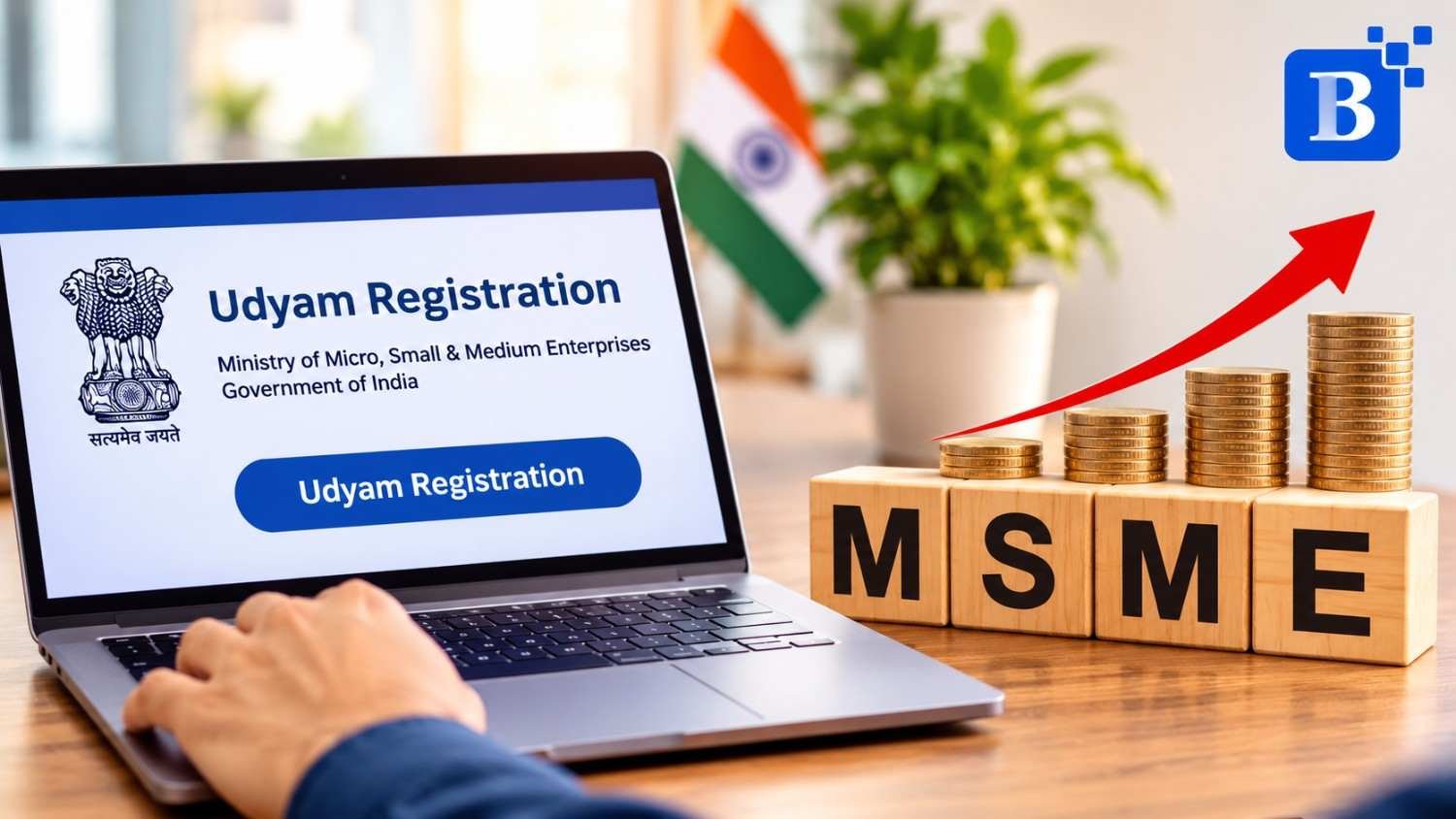
New Delhi, November 21, 2026: The number of registrations under India’s Udyam Registration Portal and Udyam Assist Platform (UAP) has crossed 10 crore, marking a major expansion in the country’s micro, small and medium enterprises (MSME) registration system.
According to the Ministry of Micro, Small and Medium Enterprises’ official dashboard, the combined number of registrations reached approximately 10.18 crore as of November 21, 2026. This includes around 5.62 crore registrations on the Udyam portal and 4.57 crore registrations on the Udyam Assist Platform.
The Economic Times reported that registrations increased by more than 42% over the past year. The growth comes amid efforts to simplify business compliance and bring more enterprises into the formal system.
The development is significant because MSMEs play an important role in India’s economy. They support manufacturing, trade, services, employment and local entrepreneurship.
However, the 10-crore figure represents the combined registrations on two platforms. It should not be interpreted as 10 crore registrations on the Udyam portal alone or as 10 crore newly established businesses.
Udyam and UAP Registrations Cross 10 Crore
The official MSME dashboard recorded the following figures on November 21, 2026:
| Registration category | Number of registrations |
|---|---|
| Udyam Registration | 5,61,81,441 |
| Udyam Assist Platform | 4,56,60,244 |
| Combined total | 10,18,41,685 |
The combined figure is approximately 10.18 crore.
The two platforms serve different purposes.
The Udyam Registration Portal is used by eligible micro, small and medium enterprises to register themselves with the government.
The Udyam Assist Platform, on the other hand, helps bring informal micro-enterprises into the formal system through an assisted registration process.
This means that a large share of the combined total comes from informal micro-enterprises registered through UAP.
The official dashboard also recorded approximately 10.18 crore classified registrations, including:
- Micro enterprises: 10,12,06,995
- Small enterprises: 5,46,442
- Medium enterprises: 42,129
Micro enterprises account for the overwhelming majority of registrations.
MSME Registrations Rise More Than 42% in One Year
According to a report published by The Economic Times on November 21, registrations under the Udyam system increased by more than 42% in one year.
The rise has been linked to simplified compliance frameworks and efforts to improve the formalisation of businesses.
The growth is also being discussed in the context of the implementation of India’s four Labour Codes, which came into effect on November 21, 2025.
These codes were introduced to simplify labour regulations, improve worker protection and make compliance easier for businesses.
A senior government official told The Economic Times that the government has observed measurable outcomes during the first year of implementation, with MSMEs among the sectors benefiting from the changes.
However, the reported increase should not be treated as proof that the Labour Codes alone caused the rise in registrations. Easier registration procedures, awareness, assisted registration and other formalisation efforts may also have contributed.
What Is Udyam Registration?
Udyam Registration is the official government registration system for India’s micro, small and medium enterprises.
It is managed by the Ministry of MSME and provides eligible businesses with a permanent registration number and an online certificate.
The registration system was introduced to create a simpler way for businesses to identify themselves as MSMEs and access relevant government support.
Businesses can use their Udyam registration details when applying for eligible government schemes, financial support and other facilities available to MSMEs.
The registration process is:
- Free of cost.
- Fully online and paperless.
- Based on self-declaration.
- Linked with government databases for relevant business information.
- Designed to provide a permanent registration number.
The official portal also states that Udyam registration does not require renewal.
Business owners should use the official government portal and avoid private websites that charge money for the registration process.
Official website: https://udyamregistration.gov.in/
What Is the Udyam Assist Platform?
The Udyam Assist Platform was created to help informal micro-enterprises become part of the formal MSME system.
Many very small businesses operate without completing formal business registration. These may include small service providers, local traders, household businesses and other micro-level enterprises.
Such businesses may face difficulties accessing formal financial services and certain government support systems.
UAP helps bring eligible informal micro-enterprises into the formal registration framework through an assisted process.
As of November 21, 2026, the official dashboard recorded around 4.57 crore registrations on this platform.
All UAP registrations shown in the dashboard fall under the micro-enterprise category.
The platform is therefore an important part of the government’s effort to expand the reach of formalisation beyond businesses that already use the regular Udyam portal.
How Are MSMEs Classified in India?
The government classifies enterprises into three categories: micro, small and medium.
The classification is based on two factors:
- Investment in plant, machinery or equipment.
- Annual turnover.
The revised limits came into effect on April 1, 2025.
| Category | Maximum investment | Maximum annual turnover |
|---|---|---|
| Micro enterprise | ₹2.5 crore | ₹10 crore |
| Small enterprise | ₹25 crore | ₹100 crore |
| Medium enterprise | ₹125 crore | ₹500 crore |
An enterprise must meet the applicable investment and turnover limits to qualify for the relevant category.
These revised limits allow businesses to expand their operations without moving into a higher category as quickly as under the earlier limits.
The government has said that the changes are intended to support business growth and encourage enterprises to increase their investment and turnover.
MSME Registration Dashboard Reports Over 45 Crore Employment Figures
The official Udyam and UAP dashboard also reports employment associated with registered enterprises.
As of November 21, 2026, the combined employment figure stood at approximately 45.13 crore.
The platform-wise figures were:
| Platform | Employment reported |
|---|---|
| Udyam Registration | 38,27,63,251 |
| Udyam Assist Platform | 6,85,25,979 |
| Combined total | 45,12,89,230 |
These figures represent employment associated with registrations as reported by the dashboard. They should not be interpreted as 45 crore new jobs created during the year.
The data nevertheless highlights the large role that registered and newly formalised enterprises play in India’s employment ecosystem.
MSMEs operate across manufacturing, services and trading activities. They include small factories, workshops, shops, repair businesses, service providers and many other enterprises.
Four Labour Codes Completed One Year
The growth in Udyam registrations comes one year after the implementation of four major Labour Codes.
The Central Government brought the following codes into effect on November 21, 2025:
- Code on Wages, 2019: Deals with minimum wages, payment of wages and related provisions.
- Industrial Relations Code, 2020: Covers industrial relations, trade unions and dispute-related matters.
- Code on Social Security, 2020: Provides a framework for social security coverage, including provisions relating to organised and unorganised workers.
- Occupational Safety, Health and Working Conditions Code, 2020: Covers workplace safety, health and working conditions.
Together, these codes rationalised 29 existing labour laws.
The government has highlighted several changes intended to simplify compliance, including a system based on a single registration, single licence and single return in relevant areas.
The codes also provide for web-based inspections and a role for inspectors as inspector-cum-facilitators.
These changes are intended to make compliance more straightforward while improving worker protection.
However, implementation remains an important issue. The Economic Times reported that around 15 states and Union Territories had notified rules under one or more of the codes, while several others were still working on finalising their rules.
This means that consistent implementation across states remains an important challenge.
Shram Suvidha Registrations Also Increase
The increase in MSME registrations is not the only development reported during the first year of the Labour Codes.
According to The Economic Times, registrations of unorganised workers on the Shram Suvidha portal also increased by around 40%.
The report said the government has been working to improve formalisation and access to social security benefits for workers in the unorganised sector.
It also reported that formal appointment letters had been issued to around 1.8 lakh contract workers in Central Public Sector Undertakings.
The Employees’ State Insurance Corporation had conducted more than 3.28 lakh annual health check-ups under the relevant provisions, along with more than 91,000 health check-ups for contract workers engaged in Central Public Sector Undertakings.
These figures form part of the wider effort to improve worker protection and bring more people into formal systems.
What Does the Growth Mean for Small Businesses?
The increase in registrations suggests that more businesses are entering or being recognised within India’s formal MSME framework.
Formal registration can help eligible enterprises identify themselves as MSMEs and access opportunities linked to government programmes.
Depending on the applicable scheme and eligibility conditions, registered enterprises may be able to benefit from:
- Access to eligible government financial assistance programmes.
- Credit guarantee and lending support.
- Participation in government procurement opportunities.
- Support for technology and quality improvement.
- Assistance with market access and business development.
- Formal mechanisms for addressing delayed payments.
However, registration does not automatically guarantee a loan, subsidy, government contract or other financial benefit.
Businesses must meet the separate eligibility requirements of each scheme or programme.
For many small enterprises, formal registration can be an important first step towards improving their access to institutional support.
What Should Business Owners Know Before Registering?
Business owners who have not registered can check their eligibility through the official Udyam portal.
The government says the registration process is free and paperless. Applicants should be careful about private websites or agents demanding unnecessary registration fees.
Before starting, entrepreneurs should:
- Check whether their business meets the MSME classification criteria.
- Keep their Aadhaar details ready.
- Ensure that PAN and GST information, where applicable, is correct.
- Provide accurate information about investment and turnover.
- Use only the official government registration website.
- Check the registration certificate after completing the process.
An enterprise should not file multiple Udyam registrations. The official portal allows multiple business activities to be included under one registration, subject to the applicable rules.
Frequently Asked Questions (FAQs)
1. How many Udyam and UAP registrations have been recorded in India?
The official dashboard recorded approximately 10.18 crore combined registrations as of November 21, 2026.
2. How many registrations are on the Udyam portal alone?
The official portal recorded approximately 5.62 crore Udyam registrations.
3. What is the Udyam Assist Platform?
UAP is a government-supported platform that helps informal micro-enterprises enter the formal MSME registration system through an assisted process.
4. How much have MSME registrations increased in one year?
The Economic Times reported that Udyam registrations increased by more than 42% over the past year.
5. Is Udyam registration free?
Yes. The official government portal says Udyam registration is free of cost, online and paperless.
6. What are the three categories of MSMEs?
The three categories are micro, small and medium enterprises. Their classification depends on investment and annual turnover.
7. What is the maximum turnover limit for a micro enterprise?
Under the revised classification effective April 1, 2025, a micro enterprise can have an annual turnover of up to ₹10 crore, subject to the investment limit of ₹2.5 crore.
8. Do the 10 crore registrations mean that 10 crore new businesses have opened?
No. The combined figure includes Udyam registrations and UAP registrations. It should not be treated as the number of businesses newly established during the year.
9. Does Udyam registration guarantee a business loan or subsidy?
No. Registration may help an eligible enterprise access relevant government programmes, but each scheme has its own eligibility and approval conditions.
10. Where can business owners register for Udyam?
Business owners can visit the official government website at https://udyamregistration.gov.in/.
Conclusion
India’s combined Udyam and Udyam Assist registrations crossing 10 crore marks a major milestone in the formalisation of small businesses.
The reported annual increase of more than 42% highlights the growing reach of the registration system and the government’s efforts to simplify business compliance.
The next challenge will be to ensure that registration translates into practical benefits for enterprises. Easier access to finance, timely payments, technology, markets and government support will be important if India’s MSME sector is to grow further and create more sustainable employment opportunities.