admin@bhaskarnewspaper.com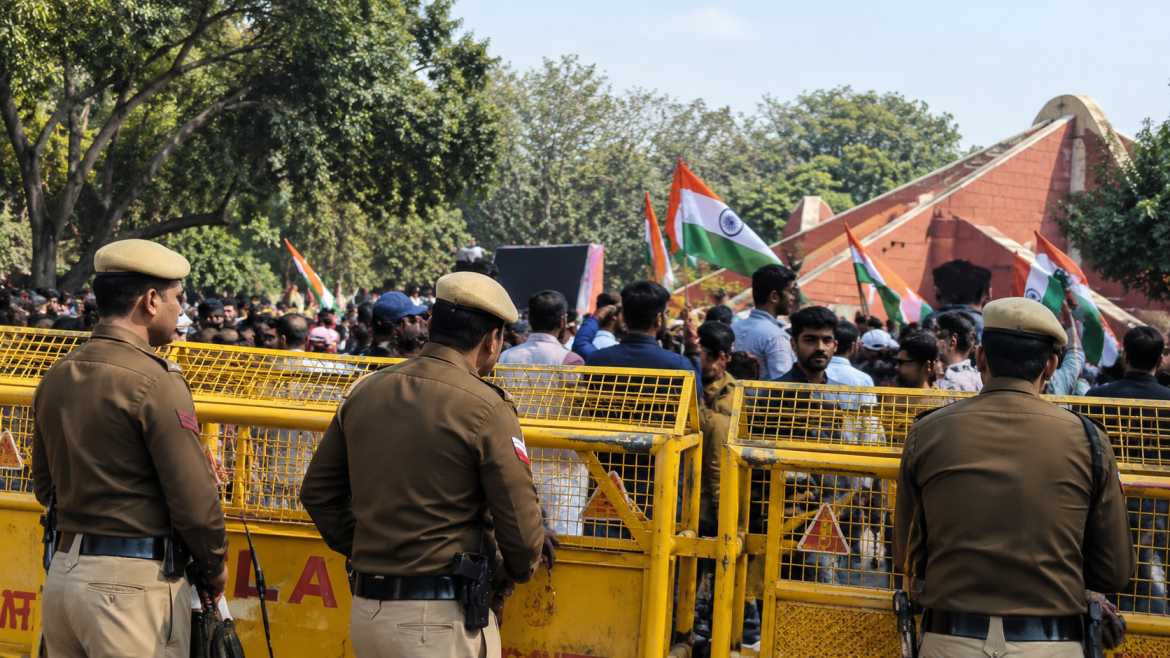
CJP leaders Jantar Mantar protest took a new turn on Tuesday, October 13, 2026, after Delhi Police registered a case against Cockroach Janta Party (CJP) leaders Saurav Das and Ashutosh Ranka and other members for allegedly entering the restricted protest site without authorisation. The action followed their entry into the heavily barricaded area as they demanded the resignation of Chief Election Commissioner Gyanesh Kumar.
Police detained the leaders and other party members after they allegedly entered Jantar Mantar despite restrictions. The incident has added to the ongoing dispute over protest permissions and allegations concerning the Special Intensive Revision (SIR) of electoral rolls.
Why Were CJP Leaders Booked?
Delhi Police registered a first information report (FIR) against Das, Ranka and other CJP members following the incident. The case concerns alleged unauthorised entry into Jantar Mantar, which had recently been removed from the list of designated protest venues.
Police had strengthened security around the area with barricades. The CJP members reportedly entered the site by crossing a gate near a Janata Dal (United) office.
The party said its members wanted to reclaim the protest site and continue their demonstration against Gyanesh Kumar. The police action followed their entry into the restricted area.
According to information presented by Delhi Police, the protesters were detained after the incident. The case remains based on allegations, and the registration of an FIR does not establish guilt.
Why Is Jantar Mantar No Longer a Designated Protest Site?
The Delhi Police withdrew Jantar Mantar’s status as a designated protest venue on October 12, 2026. The decision followed a Supreme Court order dated October 9, which asked authorities to consider suitable alternative locations for peaceful demonstrations.
The authorities subsequently identified three alternative venues for protests and sit-ins:
- Ramlila Ground
- Burari Ground
- CBD Ground in east Delhi
The Supreme Court’s observations focused on the need to identify appropriate spaces where peaceful demonstrations could take place with suitable public amenities.
Delhi Police informed the Delhi High Court on October 13 that Jantar Mantar had been denotified in line with the Supreme Court’s directions.
The change has become a major point of contention, with protest organisers questioning the restrictions and seeking permission to demonstrate at the established location.
CJP Continues Protest Against Chief Election Commissioner
The Cockroach Janta Party has been organising demonstrations demanding Gyanesh Kumar’s resignation over alleged irregularities in the SIR of electoral rolls.
The party’s concerns form part of a wider political dispute over voter list revision. Opposition leaders have also raised questions about the process and called for greater scrutiny.
The allegations against the electoral roll revision process have not, by themselves, established wrongdoing by the Election Commission. The matter remains politically contested.
CJP founder Abhijeet Dipke criticised the detention of party members and maintained that the movement would continue. The party has argued that removing the location’s designated status would not end its campaign.
Delhi High Court Considers Protest Permission Dispute
The restrictions on demonstrations at Jantar Mantar have also become the subject of legal proceedings.
The Delhi High Court considered a petition filed by Indian Youth Congress president Uday Bhanu Chib after police denied permission for a proposed demonstration against the Chief Election Commissioner.
The petition challenged the restrictions on holding a peaceful protest and raised questions about the regulation of freedom of expression and peaceful assembly.
The authorities argued that Jantar Mantar had been denotified and that alternative venues were available. The High Court issued notice to the authorities on the remaining issues and scheduled a further hearing for November, with November 17 set for the police’s response.
The legal challenge is separate from the FIR registered against the CJP members following their entry into Jantar Mantar.
What Happens Next?
The next developments will depend on the police investigation into the alleged unauthorised entry, further court proceedings and any decisions concerning protest permissions.
The CJP has indicated that its campaign against Gyanesh Kumar will continue. Meanwhile, the availability of alternative protest venues and the legal status of restrictions at Jantar Mantar remain important issues.
The case highlights the continuing tension between the regulation of public demonstrations and the right to peaceful assembly. Further official statements and judicial directions may clarify the position in the coming weeks.
Disclaimer: Details may change as investigations and legal proceedings continue. Readers should verify the latest information through official sources before drawing conclusions.